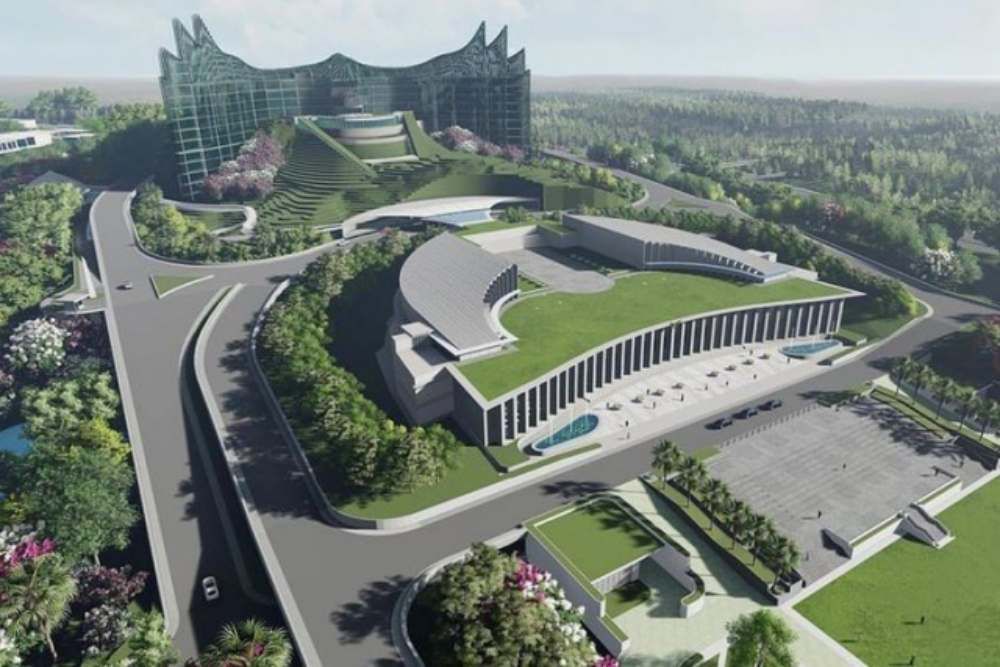
Digital twin adoption in Indonesia is beginning to grow, especially in commercial property, industrial facilities, and the IKN smart-city project. This article gives an overview of digital twin development in Indonesia, case studies across sectors, the challenges local players face, and an implementation roadmap for teams ready to start.
Digital Twin Development in Indonesia
Digital twin adoption in Indonesia is still early-stage; only a portion of large commercial buildings and industrial facilities have implemented it fully. The main players are tier 1 property developers (Sinar Mas Land, Ciputra, Summarecon), large state-owned contractors (Hutama Karya, Waskita), government agencies (PUPR, BSSN), and manufacturing. The main drivers are the BIM/digital-twin-based IKN and Smart City projects, Permen PUPR 22/2018 driving BIM as the foundation, and competitive pressure from multinationals. The main challenges are talent availability (BIM modelers who understand IoT integration), sensor infrastructure readiness, and value understanding that is not yet widespread among decision-makers.
Case Study 1: Commercial Building (Sudirman, Jakarta)
A high-rise office building in the Sudirman area implemented BIMAGE 360 with thousands of IoT sensors (temperature, occupancy, energy, equipment vibration) integrated with the existing BMS and CMMS. As a result, predictive maintenance helped detect several equipment issues before failure to avoid downtime, space utilization analytics identified under-utilized space for restructuring, and energy management lowered the building's energy use. Lesson: the key to success is the quality of the BIM 7D model from construction handover—if the model lacks detail, additional effort is needed to update it.
Case Study 2: Industrial Facility (Cikampek)
A manufacturing facility in Cikampek (tier 1 automotive) implemented a digital twin focused on production-line monitoring and predictive maintenance of critical equipment (CNC, robotic arms, conveyors), with IoT sensors integrated into the existing SCADA and MES. As a result, equipment downtime fell, maintenance costs dropped, and production efficiency improved through real-time bottleneck monitoring. Lesson: in an industrial setting, industrial-grade sensors on critical equipment deliver value faster than environmental sensors. Prioritize critical equipment (whose failure has a major production impact), then expand gradually.
Case Study 3: Smart City IKN
The IKN (Nusantara Capital) project is the flagship city-scale digital twin in Indonesia. In the early phase, the digital twin was applied to central government buildings and public infrastructure, with PUPR as master planner, state-owned contractors as implementers, and certified BIM consultants for delivery. Its scope covers integrating dozens of government buildings in a central Common Data Environment (Autodesk Construction Cloud), infrastructure monitoring (water, energy, traffic), a public-service dashboard, and disaster-preparedness simulation. Lesson for replication in other cities: digital twin governance is more complex than governing BIM on a single project, so it requires inter-agency coordination and a clear data-sharing framework.
Common Challenges in Indonesia
- Technical: availability of BIM modelers who understand IoT (solution: tiered training and partnering with a consultant); sensor infrastructure readiness (solution: phased rollout starting with critical sensors); integration with legacy systems (solution: middleware or migration to a modern platform).
- Organizational: value that is hard to quantify upfront (solution: a pilot project to validate before scaling); resistance from traditional facility management teams (solution: leadership commitment and change management).
- Regulatory: no dedicated national digital twin standard yet (solution: reference ISO 19650 for BIM and ISO 23247 for digital twins).
Implementation Roadmap
A practical roadmap: (1) discovery & assessment—audit the existing BIM model, IoT infrastructure, and BMS readiness, then engage a certified consultant; (2) design—the digital twin architecture, sensor placement plan, integration roadmap, and governance model; (3) implementation—sensor procurement and installation, platform configuration, BMS/CMMS/ERP integration; (4) pilot & testing—validation with the facility management team and refinement; (5) full deployment & handover—facility-manager training, complete documentation, and support transition. The duration and requirements scale with building size and integration complexity; BIMAGE prepares a specific estimate after assessment.
Get an Initial Consultation with BIMAGE Indonesia
BIMAGE Indonesia has a proprietary digital twin platform (BIMAGE 360) deployed across commercial and industrial facilities in Indonesia. We provide digital twin readiness assessment, end-to-end design and implementation, legacy-system integration, BIM training and implementation mentoring, and handover to the facility management team. Contact us for an initial consultation about your organization's digital twin journey.
Related Articles
Explore related topics in the BIMAGE BIM guide:
- What is a digital twin
- Smart building Indonesia guide
- What is a smart building
- How to choose a BIM consultant in Indonesia
Frequently Asked Questions (FAQ)
Are digital twins already common in Indonesia?
Not yet widespread. Adoption is still early-stage across a portion of large commercial buildings and industrial facilities. The main drivers are the IKN and Smart City projects, competitive pressure from multinationals, and proven value from early adopters.
Which sectors adopt digital twins most in Indonesia?
Three leading sectors: tier 1 commercial property, industrial facilities (automotive and oil & gas), and government smart cities (IKN and other major cities).
What is the biggest challenge in implementing a digital twin in Indonesia?
The availability of BIM talent who understand IoT, sensor infrastructure readiness, and value that is hard to quantify upfront to justify to the board.
Is there a national digital twin standard in Indonesia?
Not yet a dedicated one. Best practice references the international standards ISO 19650 for BIM and ISO 23247 for digital twins.
How do I start a digital twin in my organization?
Start with a readiness assessment (BIM model and IoT infrastructure), then pilot on one building or line before scaling. BIMAGE can help from assessment through deployment and team training.